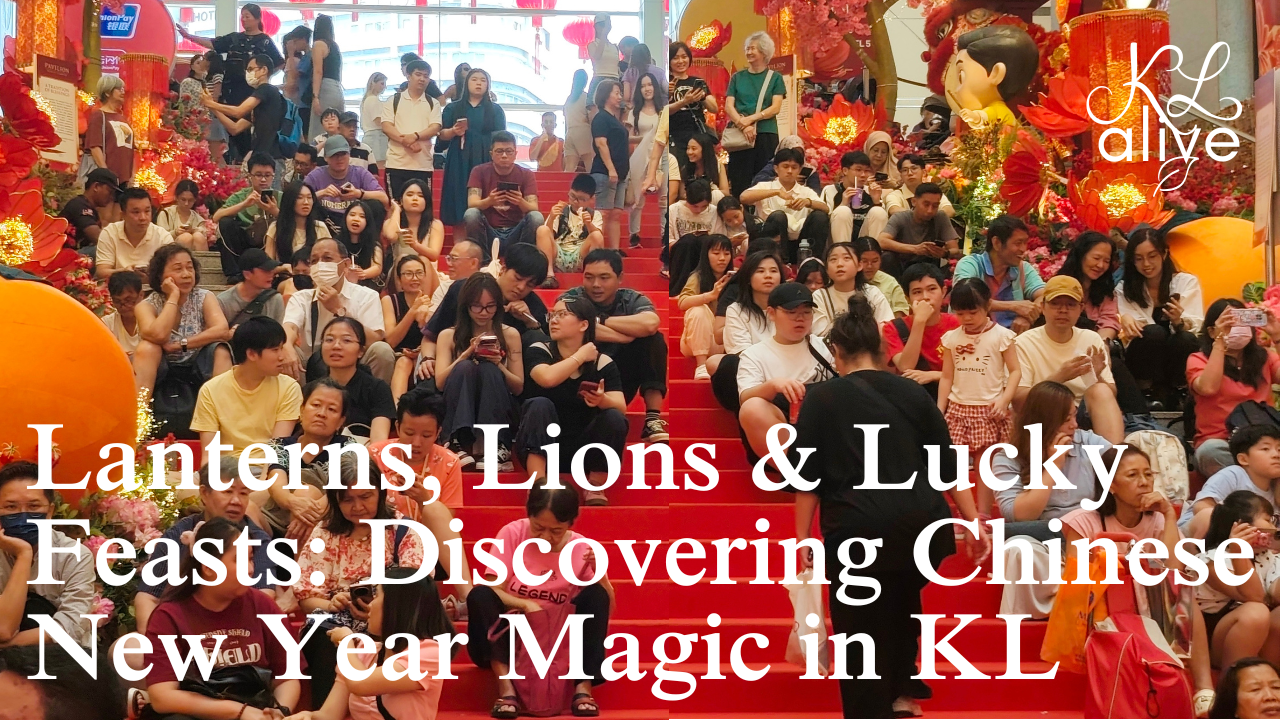
Lanterns, Lions & Lucky Feasts: Discovering Chinese New Year Magic in KL
This comprehensive travel guide serves as your cultural compass to navigating Chinese New Year in Kuala Lumpur. It begins by setting the sensory scene of a city transformed by red and gold. The post then meticulously details essential experiences: navigating the festive frenzy of Petaling Street for New Year goods, participating in serene temple rituals at Thean Hou Temple, and marveling at extravagant mall decorations. A core section decodes the social rituals, explaining the profound significance of the Reunion Dinner, the fun of Bai Nian (visiting), and the symbolism behind gifts and ang pao (red packets).
The guide also serves the practical needs of travelers, with dedicated sections on the auspicious foods to try (like Yee Sang and Nian Gao) and crucial logistical tips on timing, closures, and transportation during the festive period. Throughout, subtle insights are woven in for the observant content creator—hints on capturing unique photo angles and human stories—seamlessly integrating value for a secondary audience while maintaining a primary focus on delivering an unforgettable, immersive travel experience.
The Red and Gold Awakening
There’s a moment in late January or early February when Kuala Lumpur undergoes a metamorphosis. It begins subtly—a string of red lanterns appearing overnight outside a kopitiam, a window display transitioning from Christmas remnants to gold-flecked decorations, the sudden proliferation of mandarin oranges in every grocery store. Then, almost without warning, the city is awash in crimson and gold, pulsating with the rhythmic beat of drums and the electric anticipation of renewal. This is Chinese New Year in Malaysia’s capital, and to experience it is to witness the city’s most vibrant, communal, and profoundly sensory celebration.
For the traveler, Kuala Lumpur during CNY offers more than just spectacle; it offers immersion. It’s a chance to move beyond the skyline views of the Petronas Towers and the familiar shopping malls to touch the living traditions of a community that shapes the city’s heart. This guide is your doorway to that experience. We’ll wander through streets draped in poetic couplets, decipher the symbolism of a prosperous toss, and find where the lion dances come to life. More than an itinerary, this is an invitation to understand the mood—the feelings, rituals, and shared joy—that defines Chinese New Year in KL.
Hubs for KL Alive's Web Properties
KL Alive Website | Digital Brochure | Instagram | Facebook | X (Twitter) | TikTok | Pinterest |

Chapter 1: The Heartbeat of Celebration – Key Locations Unveiled
Petaling Street: The Unrivalled Epicentre
No place embodies the raw, frenetic energy of the season like Petaling Street in Chinatown. In the weeks leading up to the new year, this historic lane transforms from a bustling tourist market into the definitive hub for nian huo (New Year goods). The air hangs thick with the scent of incense, wax candles, and delicate pineapple tarts. Every inch of space overflows with symbolism: red lanterns of every size, strings of firecracker decorations (real ones are banned, but their crimson paper replicas abound), pots of lucky bamboo and kumquat trees heavy with golden fruit.
For the Traveler: Visit twice. Go once during the day to navigate the shops. Look for exquisite paper cuttings (jianzhi), often depicting the year’s zodiac animal or the character 福 (fu) for fortune, which is traditionally displayed upside down (the Chinese word for "upside down" sounds like "arrive," so it signifies "fortune arrives"). Return in the evening when the lanterns glow, the crowd swells with families doing last-minute shopping, and the atmosphere crackles with excitement. Be sure to try the special CNY snacks sold by temporary stalls—crispy egg rolls (love letters) and sweet, sticky nian gao cake are essentials.
A Note for Storytellers: The visual contrast here is cinematic. For content creators, the shift from daytime commerce to nighttime magic offers perfect "before and after" footage. The real stories are in the shopkeepers’ faces—the seasoned vendor meticulously arranging his pussy willow branches, the young couple running a modern stall of trendy red envelopes. Capturing their brief interactions with customers reveals the human thread in the festive tapestry. [For more on finding human angles in cultural events, see our Biz Blog post: The Art of the Interview: Telling Local Stories.]
Thean Hou Temple: A Sanctuary of Serenity and Smoke
Perched on Robson Hill, the majestic Thean Hou Temple offers a spiritual counterpoint to Petaling Street’s chaos. As one of the oldest and most significant Chinese temples in Southeast Asia, it becomes the focal point for prayers and gratitude. During the festive period, the temple complex is adorned with thousands of red lanterns, creating a breathtaking canopy of crimson against the traditional tiered roofs.
The main hall is dense with the smoke of sandalwood incense. Devotees hold spinning incense coils, their faces serene in prayer for health, prosperity, and family harmony in the coming year. Observe the rituals: the lighting of incense in a specific order, the gentle tapping of the bell after a prayer, the offering of oranges and sweets to the deities.
For the Traveler: Go early in the morning to avoid the largest crowds and experience a more contemplative atmosphere. Dress respectfully (cover shoulders and knees). Don’t just watch—participate respectfully. You can purchase a bundle of incense from the stalls outside and follow the lead of locals. Make a wish as you add your incense to the giant burners; it’s a moment of quiet connection. The view of KL from the temple grounds, framed by red lanterns, is uniquely photogenic.
A Tip for Photographers: The interplay of light, smoke, and red hues here is a dream. Use the morning or late afternoon "golden hour" light for the exterior. Inside, embrace the dramatic, atmospheric haze. A close-up shot of hands holding incense, or a weathered face illuminated by candlelight, tells a more powerful story than a wide shot of the crowd. [Our Visual Storytelling for Travel Brands guide on the Biz Blog dives deeper into crafting emotion through imagery.]
The Mall Extravaganza: Modernity Meets Tradition
To see how CNY has been embraced by contemporary Malaysia, visit the city’s iconic malls. Pavilion KL and Sunway Pyramid are renowned for their annual, often jaw-dropping, themed decorations. One year you might walk through a mythical forest inspired by Chinese legend; the next, you’re surrounded by giant, mechanized zodiac animals or replicas of traditional village scenes with high-tech lighting.
This is where the festival becomes a spectacular, family-friendly photo opportunity. Locals and tourists alike dress in their new clothes (often in red) to take pictures against these elaborate backdrops.
For the Traveler: This is ideal for a mid-day escape from the heat. The decorations are usually in place from early January until just after the 15th day of the new year. It’s less about cultural immersion here and more about appreciating the scale, creativity, and commercial energy of modern Malaysian Chinese celebrations. Many malls also host stage performances—lion dances, Chinese orchestra pieces, or even celebrity appearances—during the weekend.
An Insight for Marketers: These installations are masterclasses in experiential marketing. Notice how they are designed for shareability on social media (Instagrammable spots), how they integrate sponsor brands subtly, and how they create an emotional connection that drives footfall. It’s tradition repackaged for the digital age. [We analyze campaigns like these in our Marketing Case Studies series on the Biz Blog.]
Chapter 2: The Social Rituals – Understanding the "Why"
The true mood of CNY isn’t just in the decorations; it’s in the actions, the gatherings, and the unspoken rules that bind the community.
Reunion Dinner: The Most Important Meal of the Year
On the eve of Chinese New Year, the city quietens in a unique way. The streets may be emptier, but homes are full. This is tuan nian fan, the reunion dinner, an non-negotiable event where families gather, often traveling across the country or even the region to be together. It symbolizes family unity and respect for ancestors.
For the Traveler: While the dinner itself is a private family affair, you can partake in its most famous public component: Lou Sang, or the Prosperity Toss. In the days leading up to CNY and throughout the 15-day season, restaurants offer elaborate Yee Sang platters—a vibrant salad of shredded vegetables, raw fish (usually salmon), crackers, and sauces, each ingredient symbolizing prosperity, abundance, and good health. When the platter is served, everyone stands, and with chopsticks held high, they toss the ingredients together while shouting auspicious phrases like “Gong Xi Fa Cai!” (Wishing you prosperity!) The higher the toss, the greater the luck.
Book a table at a reputable Chinese restaurant (like the legendary Sek Yuen in Old KL or any good restaurant in Bangsar or Damansara) and order a Yee Sang. Don’t be shy—participate fully in the loud, joyful tossing ritual. It’s an unforgettable experience of shared optimism.
The Art of Visiting: Bai Nian and Ang Pao
The first days of the new year are for Bai Nian—visiting relatives and friends. Homes are open, filled with the scent of tea and the sound of laughter. Guests bring gifts, always in pairs: two mandarin oranges (symbolizing gold and good fortune), a box of biscuits, or a bottle of wine. In return, hosts offer trays of sweets—candied melon, lotus seeds, chocolate coins—and endless cups of Chinese tea.
For unmarried visitors, the highlight is receiving ang pao (red packets). These small red envelopes contain money, always an even, auspicious amount. It’s a gesture of blessing, transferring good fortune from the older/married generation to the younger.
For the Traveler: As a respectful outsider, you likely won’t be part of private home visits. However, you will see the ritual everywhere: people dressed in new clothes carrying gift bags, the exchange of oranges at shop counters. If you are invited to a home (perhaps by a local friend you’ve made), it is a tremendous honour. Follow the basic rules: bring a gift (a nice fruit basket or pastries), offer the oranges with both hands, and refuse an ang pao politely if offered (they are typically for family and the unmarried).
A Language of Symbols and Taboos
The festival is governed by a beautiful logic of symbolism. Understanding a few key points deepens your appreciation:
Colours: Red dominates—it wards off evil (legend of the Nian monster). Gold represents wealth and prosperity.
Flowers: Pussy willow blossoms symbolize growth and prosperity. Orchids represent refinement and fertility.
Foods: Fish (yu) sounds like "surplus," promising abundance. Nian gao (sticky cake) symbolizes rising fortunes and family cohesion.
Taboos: Avoid sweeping on New Year’s Day (you might sweep away good luck). Don’t use sharp objects (they "cut" luck). Don’t buy shoes during the period (the word for shoes sounds like "rough"). Crying and arguing are to be avoided to ensure a smooth year ahead.
For the Traveler: You’re not expected to follow these taboos, but being aware of them helps you understand the behaviors you see and avoid accidental faux pas. Notice how homes are meticulously cleaned before New Year’s Day, and how you won’t see haircut salons open on the first day.


Giap One Biz & Brands:
I am Giap, the founder of this website, KL Alive.
KL Alive is one of Giap One's focused biz and brands:
• Qdigital: Digital Marketing
• KL Alive: Kuala Lumpur Travel Guide
• WhaleBuy Digital: E-Commerce Go Online+Offline
•
Chapter 3: A Content Creator’s Lens: Capturing the Mood (Weaved In)
While you’re soaking in the sights, here’s how to capture them in a way that tells a deeper story, whether for your own memories or for a broader audience.
Seek the Unseen Moments: Everyone photographs the lion dance. But what about the dancer adjusting his costume headpiece in a quiet alley before the performance? The elderly woman selling red packets from a tiny stool, her hands moving with practiced efficiency? The child’s wide-eyed wonder as they see the lion up close for the first time? These moments hold the true emotion. [For creators: this is the power of ‘behind-the-scenes’ content. It builds authenticity and connection. Our guide on Building an Authentic Brand Voice explores this further.]
Focus on Details: The texture of a wrinkled hand placing an incense stick. The intricate embroidery on a traditional cheongsam. The condensation on a glass of barley water next to a plate of greasy crackers. A mosaic of these details can be more powerful than wide-establishing shots.
Engage Gently: A warm smile and a polite “Gong Xi Fa Cai” can open doors. Ask simple questions: “What does this mean?” or “Is this your busiest time of year?” The stories you’ll hear from a fifth-generation shop owner in Petaling Street or a young performer in a modern dance troupe blending hip-hop with lion dance are pure gold. [For solopreneurs: this is grassroots networking and content research in one. Learning to ask good questions is your greatest skill. Our Content Creator’s Journal on the Biz Blog talks about turning conversations into content.]
Chapter 4: The Flavours of Fortune – A Culinary Journey
CNY is a feast for the stomach as much as the eyes. Beyond Yee Sang, specific foods are eaten for their lucky connotations.
Yu Sheng (Yee Sang): The prosperity toss salad, as described. A must-do experience.
Nian Gao (Sticky Cake): Often served sliced, pan-fried, or steamed. Its sticky nature symbolizes families sticking together.
Mandarin Oranges: The universal gift. Sweet, golden, and symbolizing abundant wealth.
Pineapple Tarts: The buttery, jam-filled stars of every visitation tray. In Hokkien, pineapple is ong lai, which sounds like "prosperity comes."
Steamed Whole Fish: Served at the reunion dinner, always left with some leftover to signify surplus year-round.
Dumplings (Jiaozi): Their shape resembles ancient gold ingots, promising wealth.
Longevity Noodles (Mian): Eaten uncut, symbolizing a long, unbroken life.
For the Traveler: Visit a Chinese bakery in the weeks before CNY. The selection is staggering. Try the variety of cookies—kuih bangkit (coconut cookies), almond cookies, and love letters. For a full meal, book a CNY set menu at restaurants like Tao, Li Yen, or Celestial Court. These multi-course feasts are designed around auspicious ingredients and are a fantastic culinary adventure.
Chapter 5: The Practicalities – Navigating KL During CNY
When to Go: The peak atmosphere is from 3-4 days before New Year’s Eve (shopping frenzy) through the first 3 days of the new year (public holidays, major closures, private celebrations). The **15th day (Chap Goh Meh)*, marking the end, sees lantern displays and minor celebrations.
Closures: Be prepared! Many businesses—especially local Chinese-owned eateries, shops, and even some clinics—will be closed for at least the first two days of the new year. Major chains, hotels, and tourist spots in malls will remain open.
Transport: Traffic is horrific leading up to CNY as people travel home. Use the LRT/MRT to get to Petaling Street (Pasar Seni station) and Thean Hou Temple (Kerinchi station, then a short ride). Ride-hailing apps will have surge pricing.
What to Wear: It’s hot and humid. Wear light, breathable clothing. Including something red (a scarf, a shirt) will make you feel part of the festivities and is always appreciated. Comfortable shoes are non-negotiable for crowded areas.
Money: Have enough cash. While cards are widely accepted, smaller vendors in Chinatown and temple donation boxes operate on cash.
Conclusion: Taking the Mood Home
Experiencing Chinese New Year in Kuala Lumpur is an exercise in joyful immersion. It’s a time when the city’s modern façade softens to reveal the deep, pulsing traditions of its people. You leave not just with photos of red lanterns, but with the resonant boom of drums in your chest, the taste of sweet pineapple tart on your tongue, and the memory of a thousand smiles exchanged with strangers under the shared banner of hope and new beginnings.
You’ve learned to toss for prosperity, to read the symbols in a simple orange, and to feel the collective heartbeat of a city in celebration. This is the true mood of Chinese New Year in KL—a mood of renewal, connection, and boundless, colourful optimism that lingers long after the last lantern is taken down.
A Final Note for Fellow Builders and Creators: The process of crafting a guide like this—balancing vivid travel narrative with subtle value for our business-minded readers—is a journey in itself. It involves strategic framing, intentional internal linking, and a deep understanding of dual-audience value. If you’re curious about the behind-the-scenes content strategy, from the initial AI-assisted framework to the final weave of narrative and nuance, I’ve detailed the entire process over on our Biz Blog. See how we turn cultural immersion into a content strategy that serves both the heart and the mind: [Behind the Scenes: Building a Dual-Purpose Content Framework with AI].
Gong Xi Fa Cai! May your year be filled with prosperous travels.


How I Build KL Alive Business with AI, Thrive Theme, Canva, Obsidian.


Getting To Know Giap • The Founder of Cancer Fight Funds


